Now in Beta-testing on invite only

23rd April 2026
//
Case Studies//
Upcycling Polystyrene Lab Waste into Catalysts through Open Science and Co‑Creation
Organisation: University College of London
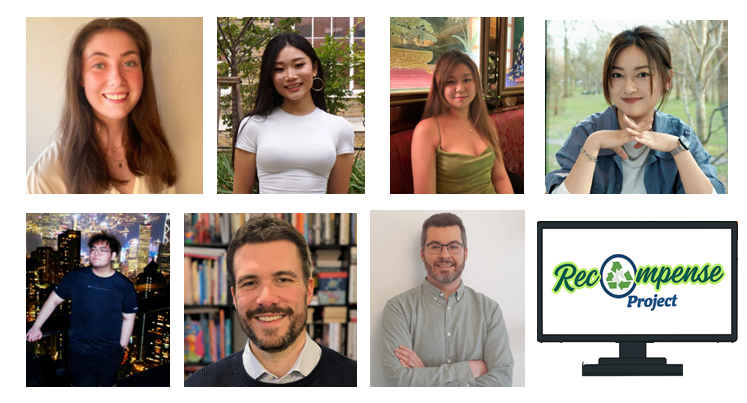
Authors: Victoria Lageard, YuHan Yan, Jiayin Liu, Yueze Gong, Shuoxi Liu, Bob C. Schroeder, David Palomas
Laboratories worldwide generate approximately 5.5 million tonnes of single‑use plastic waste every year, with polystyrene (PS) being among the least recycled laboratory plastics due to its low density and poor economic viability for traditional recycling routes. At the same time, academic laboratories continue to seek accessible, low‑cost ways to adopt more sustainable research practices.
The RECOMPENSE project (REcyclable Catalysts frOM PolystyrENe waStE) was created at University College London (UCL) in response to these challenges. What began as a research project in our MSc Sustainable Chemistry, evolved into a wider student–staff partnership focused on developing practical, reproducible methods for chemically upcycling waste PS into polystyrene sulfonic acid (PSSA), a reusable solid acid catalyst suitable for green organic synthesis.
Through open‑science principles, the RECOMPENSE project (https://recompenseproject.com/) aims to provide freely accessible protocols, characterisation data, and educational resources to help institutions reduce plastic waste and embed sustainability into chemistry training.
A team of researchers and student partners developed an accessible and reproducible method for converting expanded polystyrene waste into PSSA. The team explored different sulfonation conditions before standardising a protocol that allowed reliable isolation of PSSA in typical academic laboratory settings. This work involved dissolving waste PS in ethyl acetate to overcome handling difficulties related to static charge and volume, followed by controlled sulfonation using concentrated sulfuric acid and subsequent precipitation, washing, and drying of the catalyst. The resulting PSSA was then fully characterised using techniques such as FTIR, NMR, TGA, DSC, and titration, confirming degrees of sulfonation between 30% and 45%.
Following successful synthesis, the team evaluated the catalytic performance of PSSA in Friedel–Crafts reactions, developing a protocol to obtain a precursor of biofuel from the biomass-derived chemicals furfural and 2-methylfuran. The upcycled material consistently demonstrated efficiencies comparable to commercial catalysts, validating its applicability in green organic synthesis.
In parallel, the project adopted a student–staff partnership model in which undergraduate interns, funded through an RSC Sustainable Laboratories Grant, contributed to both scientific validation and open‑science resource development. These students produced written protocols, video demonstrations, digital content, and managed dissemination through a dedicated website and YouTube channel. Their role extended beyond traditional research assistance, granting them autonomy in communication strategy, design, and user‑experience development.
The RECOMPENSE initiative demonstrated that laboratory PS waste can be effectively repurposed into a functional catalyst, offering a route for reducing plastic waste and supporting circular‑economy principles within academic teaching and research environments. The protocol, originally developed using expanded polystyrene from packaging deliveries received in our facilities, is now being adapted for common polystyrene labware such as Petri dishes, weighing boats, spectroscopy cuvettes, and serological pipettes.
The educational impact was equally significant. By embedding co‑creation and open‑science practices into the project structure, students gained hands‑on experience in green chemistry, digital communication, systems thinking, and professional identity building. This approach expanded the scope of typical undergraduate research experience and fostered a sense of ownership and agency in contributors. The global reach of the openly accessible RECOMPENSE platform further amplified impact, with users from more than twenty countries accessing the protocols and resources.
The results of our study are now published open access in the Royal Society of Chemistry journal RSC Sustainability: https://doi.org/10.1039/D5SU00927H
Working with expanded polystyrene waste was found to require practical, well‑documented procedures to ensure reproducibility across different laboratory settings. Dissolving the material before sulfonation proved essential for addressing issues related to static charge, bulkiness, and inconsistent handling, reinforcing the importance of accessible, user‑friendly protocols.
It also became clear that the continued progress of the RECOMPENSE project relies on the growth of an active community. As an open‑science initiative, the project depends on shared contributions, feedback, and collaboration. Broader participation from students, educators, and researchers will be essential for developing new applications of PSSA, refining existing protocols, and sustaining momentum.
International engagement with the open‑access platform further demonstrated the value of transparent, community‑driven approaches. The widespread use of the resources highlighted the need to keep expanding a network capable of supporting the ongoing evolution of the RECOMPENSE project.