SPARKHub is completing updates and will launch on December 1st , 2026

2nd November 2026
//
Case Studies//
Smarter Imaging, Greener Research: Transforming Data Management at Newcastle University
Organisation: Newcastle University
Authors: Glyn Nelson and Alex Laude
Biomedical research makes extensive use of imaging data, with detailed analysis resulting in data and datasets that continue to increase in size and complexity. These increases place strain on data storage infrastructure and raise questions about existing storage practices.
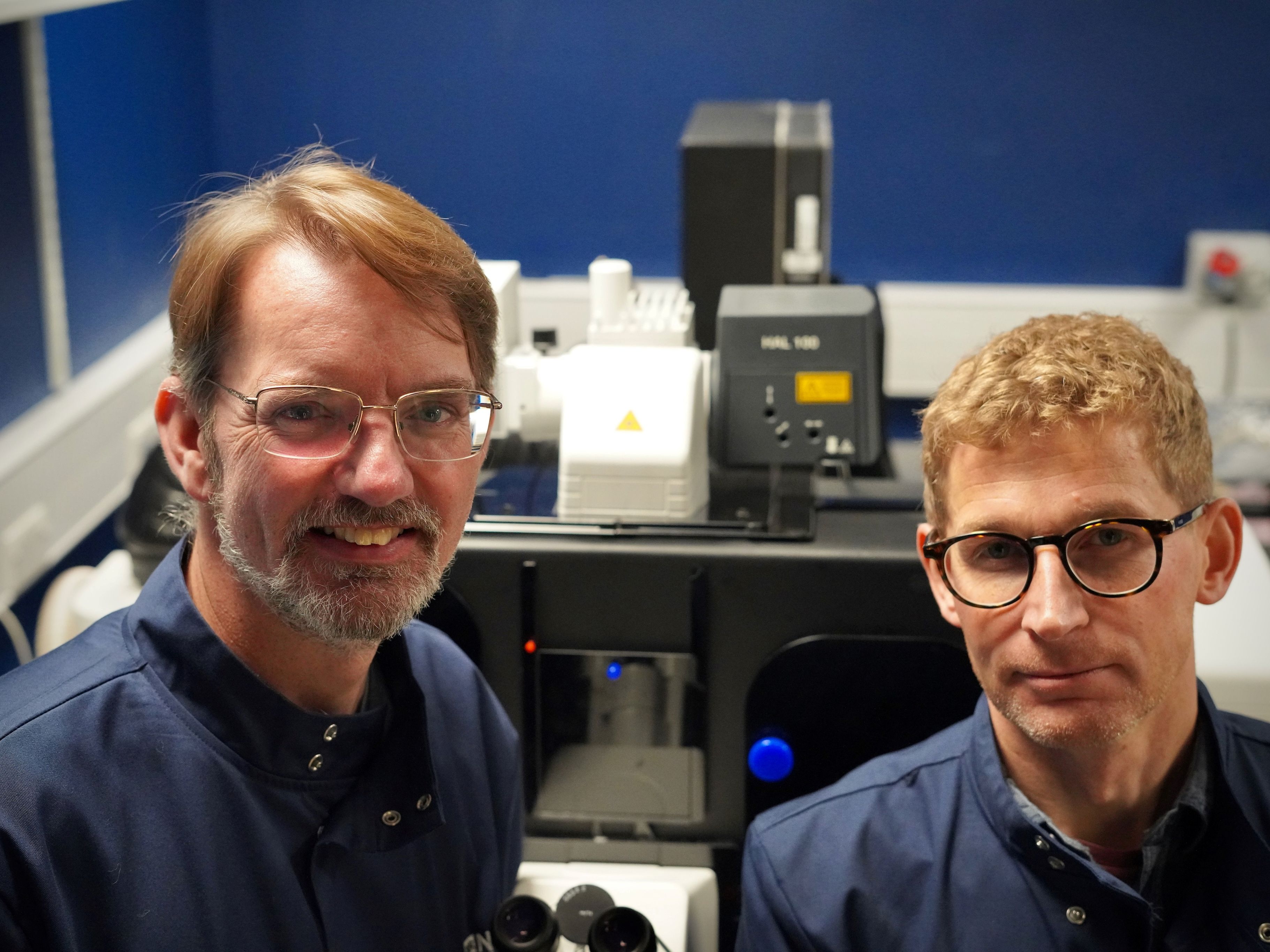
Glyn Nelson works in Newcastle University’s Bioimaging Core Facility, offering access to advanced light microscopy technologies and techniques, alongside his colleague Alex Laude, who leads the Faculty of Medical Sciences’ Research Facilities. Glyn and Alex became concerned about the growing scale of imaging data and its incompatibility with existing storage practices.
The facility generates around 2.5 terabytes of image data each week, totalling approximately 130 terabytes per year. Issues around data annotation, copying and obsolescence highlighted the need for a more robust approach. Glyn was particularly concerned about unnecessary data duplication and the lack of provenance, as moving and copying data between storage media is energy-intensive and can have a negative environmental impact.
Glyn and Alex identified OMERO (Open Microscopy Environment) as a centrally based image curation and sharing platform that promotes FAIR (Findable, Accessible, Interoperable and Reusable) data management practices while reducing data duplication and movement. Previously, bioimage analysis at Newcastle University relied on 10 energy-intensive desktop PCs that could only be accessed within the facility. Recognising the ongoing hardware and energy costs and the need for more flexible working arrangements following the COVID-19 pandemic, Glyn and Alex embarked on a project to replace these PCs with three high-performance, remotely accessible servers that would interface with OMERO.
This brought together a more efficient computing infrastructure with a centralised platform for imaging data curation and sharing, helping to improve data management practices and support open research.
The move to high-performance servers and OMERO has increased the computing power available within the facility while enabling remote access around the clock. It has also delivered significant improvements in environmental sustainability compared with the previous solution. The shared infrastructure now supports over 450 colleagues across bioimaging facilities, providing a scalable approach to computing and data management. The energy saved by reducing the image analysis from 10 high end PCs to 3 servers is about 44kWh per day, approximately 16,000 kWh per year.
Additionally, the new management system removes the duplication of data on the servers, saving approximately 130Tb of storage. While the duplication costs are negligible for reading/writing the data, the energy costs of maintaining such a volume of of RDW storage is about 5,500 kWh per year. Overall, the project is estimated to produce energy savings of around 21,500 kWh.
Operating costs and energy consumption within bioimaging facilities have reduced through the shift towards server usage. At the same time, imaging data management now embraces FAIR principles, and data storage practices have improved. Poor data annotation has been significantly reduced, alongside the risk of data loss or obsolescence. The project has therefore delivered environmental and financial benefits while also enhancing open research practices.
This case study highlights the importance of considering the environmental impact of research data throughout its lifecycle, from storage and annotation to sharing, reuse and long-term preservation.
Unnecessary data duplication and movement between storage media can consume significant energy, demonstrating the value of centralised data management and shared infrastructure.
The experience at Newcastle University also shows how reviewing existing hardware and computing practices can create opportunities to reduce energy consumption and operating costs while improving research capabilities and accessibility.
Finally, aligning sustainable computing with open research practices can deliver multiple benefits. By combining OMERO with remotely accessible, high-performance servers, Newcastle University has improved access to imaging data, supported more flexible working and strengthened FAIR data management, while reducing the environmental impact of its bioimaging facilities.